

China SIM Card, eSIM or Roaming? 2026 Guide for Foreigners
Compare China SIM cards, eSIMs, and roaming in 2026, with airport vs city buying tips, carrier choices, passport rules, and VPN advice.

–12 min read
China SIM Card, eSIM or Roaming? 2026 Guide for Foreigners
Compare China SIM cards, eSIMs, and roaming in 2026, with airport vs city buying tips, carrier choices, passport rules, and VPN advice.
–12 min read
Before traveling or going on a business trip to China, it is worth planning your mobile connection in advance. Your home-country SIM card may not work smoothly in China for data, calls, or regular phone use.
But if you get a Chinese local SIM card, you run into a different issue: it uses mainland China’s domestic network by default, so overseas services like Google, YouTube, WhatsApp, and Instagram usually cannot be accessed directly.
And if you rely only on your foreign phone number, some Chinese local apps may still create problems around registration and verification.
So this guide compares three main options directly: international roaming, travel eSIMs, and Chinese local SIM cards, to help you make the right choice with less hassle.
SIM Card Solutions Comparison
1. International Roaming
If you plan to use this option, contact your carrier before leaving for China and confirm the following:
- Whether your SIM card has international roaming enabled and can be used normally in mainland China
- Whether, after roaming is enabled, you can still access Google, YouTube, and other international services in China. If your roaming uses home-country routing, it usually works; if your traffic is routed through local Chinese networks, it may still be blocked by the firewall.
Pros
- No need to buy or apply for an extra SIM card
- Direct access to Google and other international internet services
Cons
- Usually expensive. For some carriers, such as Verizon, costs can be around
US$10per day. - You may still run into internet services that are only properly supported with a Chinese phone number.
2. eSIM
- An eSIM moves the traditional plastic SIM card into a small built-in chip inside your phone. You do not need to insert or swap anything physically. Just scan a QR code or activate it in your device, and the phone number or data plan is downloaded to your device, so switching numbers or plans is much easier.
- If you choose this option, first confirm that your phone supports eSIM, then look for an eSIM provider that works in mainland China and buy a plan that matches your trip length.
Pros
- Usually cheaper than international roaming
- Direct access to Google and other international internet services
- Very convenient if your phone only has one physical SIM slot
Cons
- Your phone must support eSIM
- Many travel eSIM plans are data-only, which means no normal calls or SMS
- They usually do not solve Chinese phone number needs for local services
If you are visiting China short term and want mobile data as soon as you land, Trip.com’s China travel eSIM is a practical option. You can book and install it before your trip, then enable data roaming after arrival: Book a Trip.com China travel eSIM before you fly.
3. Chinese Local SIM Card
If you choose this option, keep these three points in mind:
- Chinese local SIM cards are physical cards. If you still want to keep your current physical SIM, check whether your phone supports dual SIM. If necessary, you may need a phone model that supports two physical SIM cards.
- Confirm whether your phone is carrier-locked. Some contract phones from overseas carriers cannot use SIM cards from other networks. A simple test is to try a SIM from a different carrier before your trip. If it does not work, contact your carrier to unlock the phone.
- Confirm that your phone supports the frequency bands used by China’s three major carriers. If it does not, you may insert the card successfully but still get no signal. You can check this at frequencycheck.
Pros
- Better value for money
- Easier to register and use Chinese internet services
- Faster local network speeds
Cons
- You cannot directly access services like Google, so you will need a VPN if you want international internet access.
- You still need to show your passport in person for real-name registration and SIM pickup, usually at an airport counter, an official carrier store, or after ordering online for on-site collection.
If you need a Chinese phone number for SMS verification, local app registration, or a longer stay, a Chinese local SIM card is the better fit. You can book a tourist SIM card before your trip and pick it up after arrival: Book a Trip.com China local SIM card before your trip.
4. Need internet for your laptop, tablet, or extra devices?
If you also need internet for other devices such as a laptop, you can use mobile hotspot sharing, a VPN, or a similar setup depending on your situation.
If you choose an eSIM plan, make sure the plan supports hotspot sharing before you buy it.
What Chinese internet services are affected if you do not get a Chinese local SIM card?
For short-term visitors to China, core needs like payments, ride-hailing, public transportation, hotel booking, and high-speed rail tickets usually do not require a Chinese phone number.
What tends to be affected more often is the use of some local lifestyle services, especially through Chinese local apps, though in some cases WeChat or Alipay mini programs can work as a workaround.
| App / Service | Main use | Usually needs a Chinese number? | Notes |
|---|---|---|---|
| Alipay | Payments, QR payments, mini programs | No | Supports international phone numbers and foreign bank cards |
| WeChat / WeChat Pay | Messaging, payments, mini programs | No | Supports international phone numbers and foreign bank cards |
| Didi | Ride-hailing | No | Supports international phone numbers and international bank cards |
| Trip.com | Hotel booking | No | International platform, easy for registration and payment |
| 12306 / Trip.com | High-speed train tickets | No | Can use email registration and international bank cards |
| Meituan / Taobao Flash Sale | Food delivery, local lifestyle services | Maybe | Registration may work, but verification, delivery contact, or rider communication can still be affected |
| Meituan / Ctrip / Qunar / Fliggy / Tongcheng | Hotels, local services | Maybe | App registration may not always support foreign phone numbers; mini programs are often easier |
| Dianping / Amap | Restaurants, reviews, local lifestyle info | Maybe | Some international numbers may be supported inconsistently, so testing in advance is a good idea |
For more detail, you can also read the related articles on this site.
How to Buy a Chinese Local SIM Card
1. What should you prepare before buying?
-
Passport: Chinese phone cards require real-name registration, and you will usually need your original passport.
-
An unlocked phone: Some overseas contract phones cannot use Chinese carrier SIM cards, so check before you leave.
-
Band compatibility: Make sure your phone supports the frequency bands used by China’s three major carriers. Otherwise you may still get no signal even after inserting the SIM. You can check this at frequencycheck.
-
A physical SIM slot: Chinese local SIM cards are usually physical cards. If you want to keep your original physical SIM at the same time, confirm that your phone supports dual SIM.
-
Your expected usage: Decide in advance whether you mainly need a Chinese number, calls and SMS verification codes, or just temporary internet access. That will make choosing a plan much easier.
Usage level Typical scenario Approximate daily data need Light use Maps, payments, ride-hailing, messaging, occasional travel planning 0.5-1GB / day Medium use Plus social media, checking restaurants and hotels, and some short videos 1-3GB / day Heavy use Frequent short-video scrolling, video calls, hotspot sharing for a laptop, or multiple devices 3GB+ / day This table is only a practical reference. It is usually better to leave yourself a bit of extra margin when choosing a plan.
2. Comparison of China’s three major carriers
- China Unicom: Usually the easiest choice for foreign visitors. It supports many international phone models and is stable in cities, though weaker in rural areas.
- China Mobile: Usually has the broadest coverage, making it a stronger choice if you will travel outside major cities.
- China Telecom: Often seen as good value, and many travelers also consider it a practical option if they will spend more time in southern China.

3. Ways to buy
There are three common ways for foreigners to buy a Chinese local SIM card.
If you are visiting China for a short trip and want the easiest setup, airport counters or online purchase with airport pickup are usually the most convenient. If you are staying longer or care more about plan flexibility, city carrier stores are often a better fit.
| Purchase method | Best for | Pros | Things to watch |
|---|---|---|---|
| Airport counter | People who need internet immediately after landing | Instant setup, most convenient | Plans are usually more tourist-oriented and usually cost more than city stores |
| Trip.com and similar online platforms | People who want to plan ahead and reduce on-site hassle | You can check plans in advance and see more clearly whether they include a local number, calls, SMS, and data | Before ordering, check the pickup airport, validity period, and whether the plan matches your trip length, data use, and call needs |
| City carrier store | People staying longer or wanting more flexible plans | More plan choices, better for longer-term use | You need to make an extra trip, and it is best to visit a large official carrier store rather than a small phone shop |
Airport / online tourist package reference
| Common validity | Typical package | Approximate price |
|---|---|---|
| 7-10 days | 20-35GB data + 100-150 minutes of calls | US$12-17 (about RMB 85-120) |
| 15 days | 30-50GB data + 200 minutes of calls | US$17-21 (about RMB 125-150) |
| 30 days | 50-80GB data + 300 minutes of calls | US$27-35 (about RMB 195-250) |
These prices mainly reflect tourist packages currently visible at airport counters and online platforms. City carrier stores usually have cheaper options, especially for people staying longer.
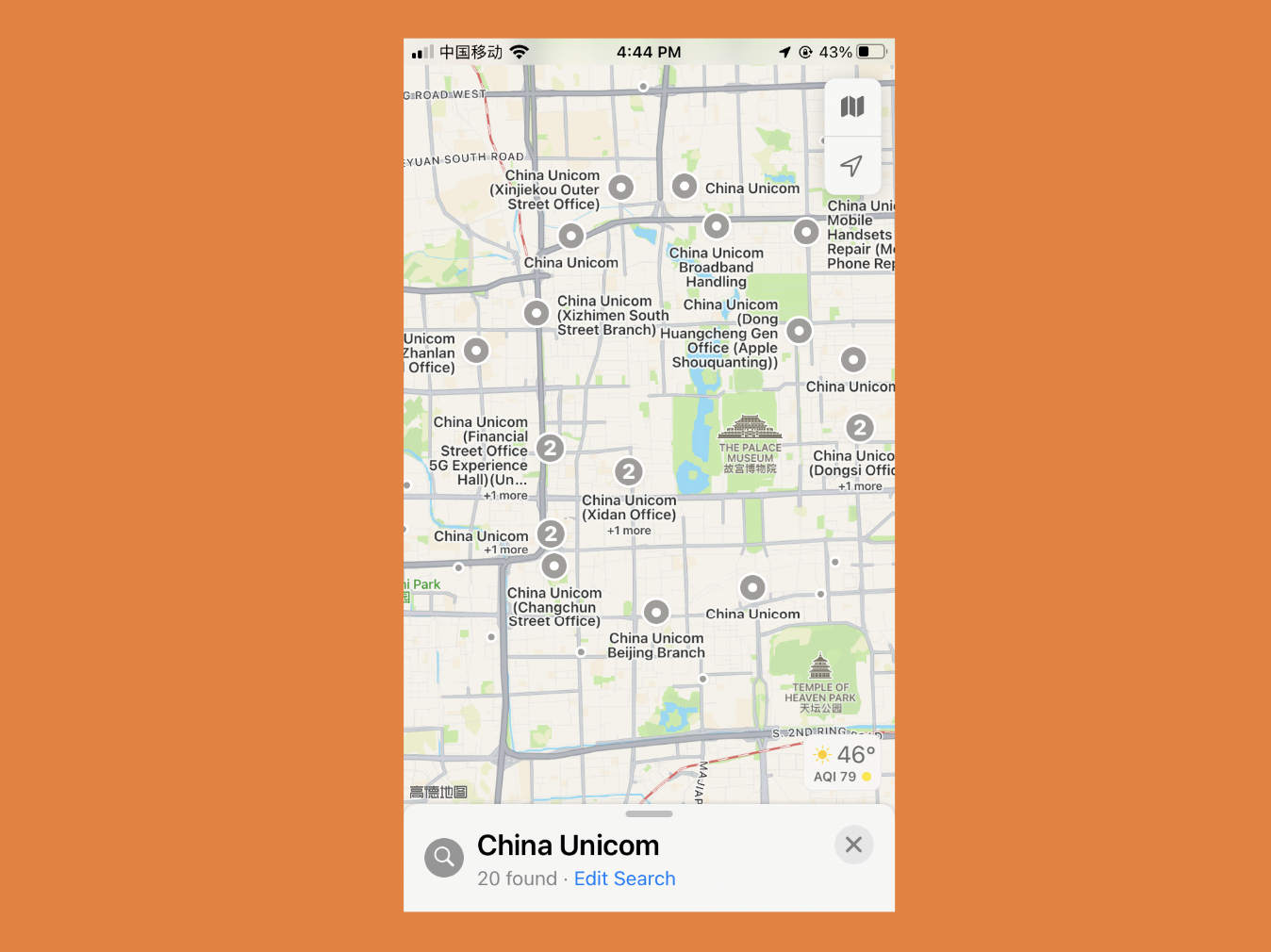
If you plan to go to a city carrier store, you can simply search in your map app for the official store of the carrier you want.
4. Purchase steps
- Show your passport and complete real-name registration.
- Tell the staff how long you will stay and what you mainly need: data, calls, or SMS verification codes. Then choose a suitable plan.
- Ask the staff to install and activate the SIM card on the spot, then check that your phone has signal, can get online, and that you understand how to top up or check your balance later.
5. Topping Up & Checking Balance
-
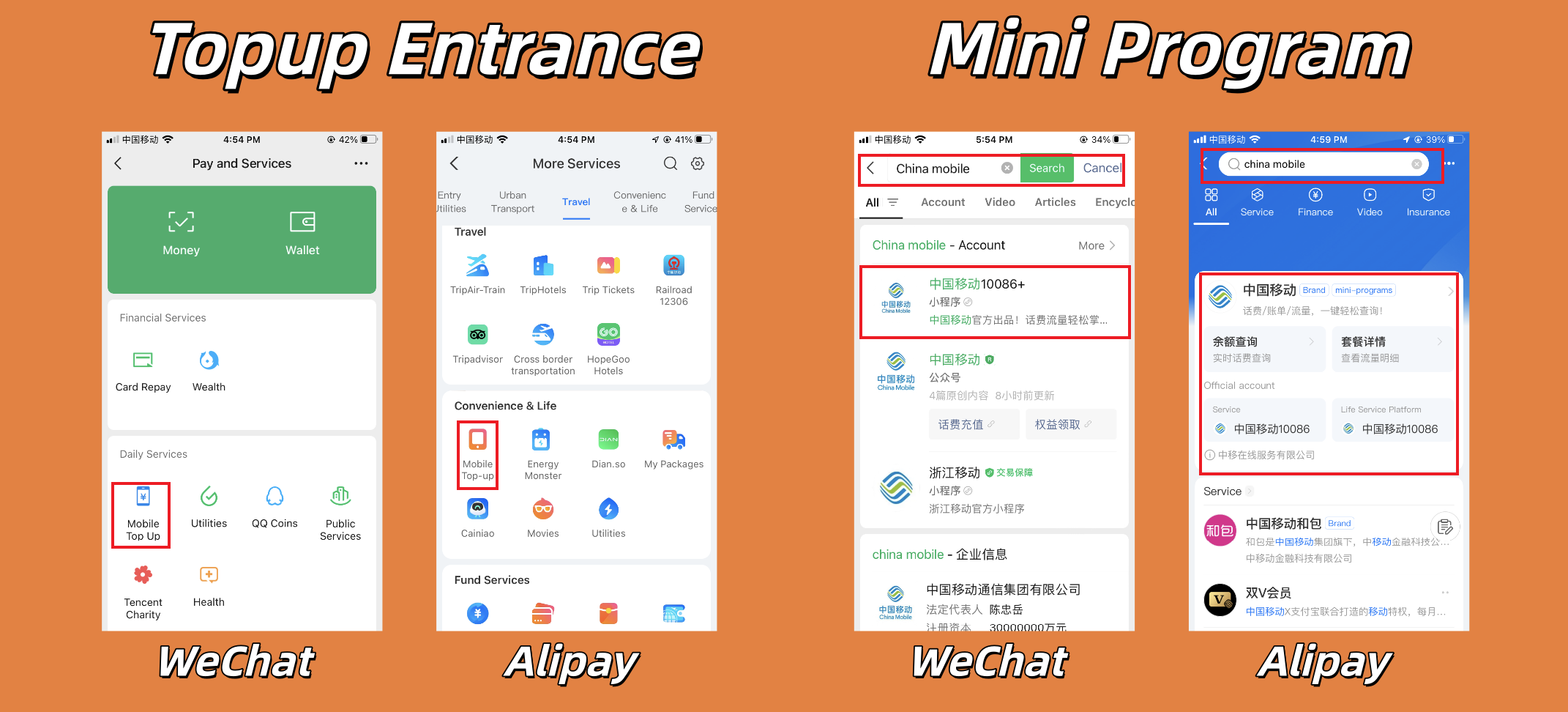
You can top up and check balance through WeChat or Alipay
- Top-up entrance
- Mini programs for each carrier
For WeChat and Alipay setup guides, see:
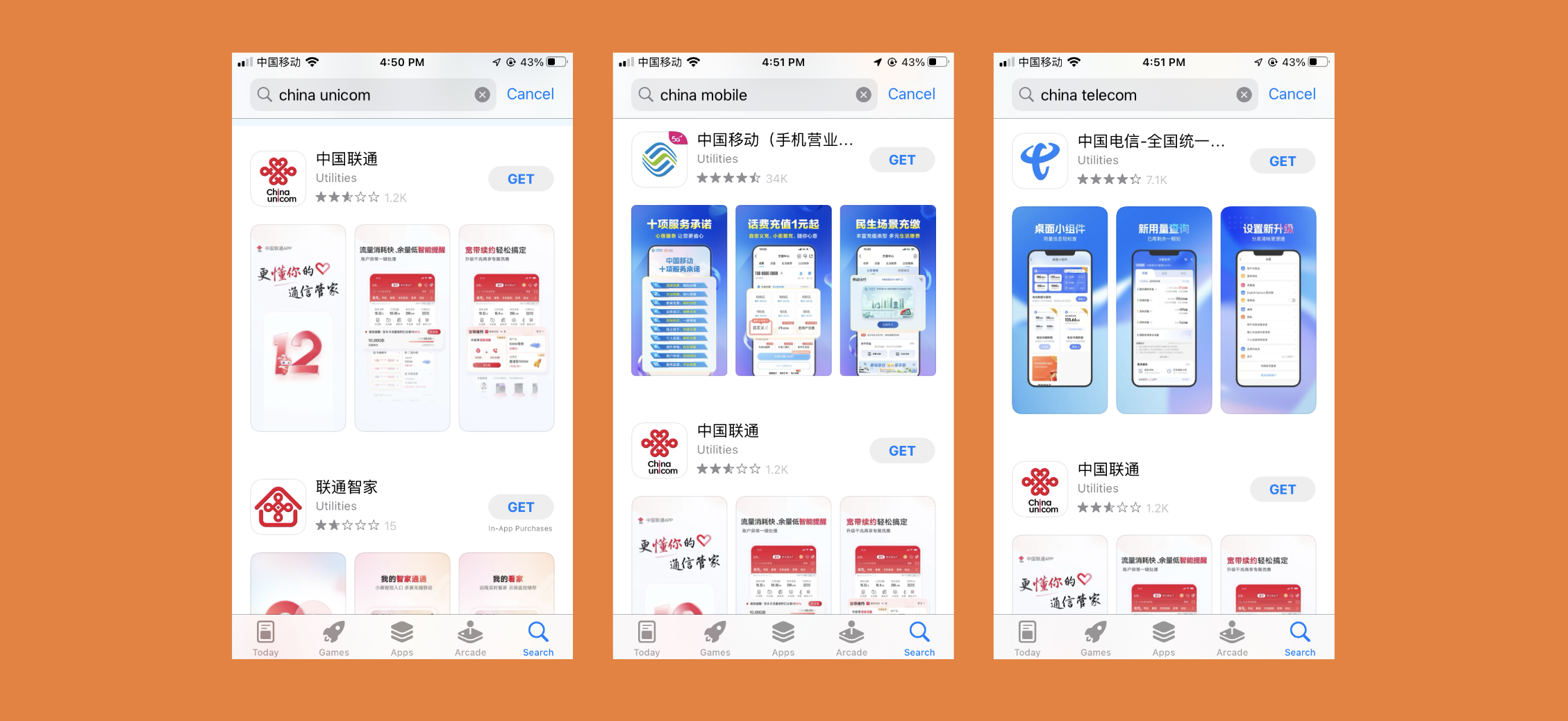
- Download the official apps of the three carriers from your app store
Recommended VPNs
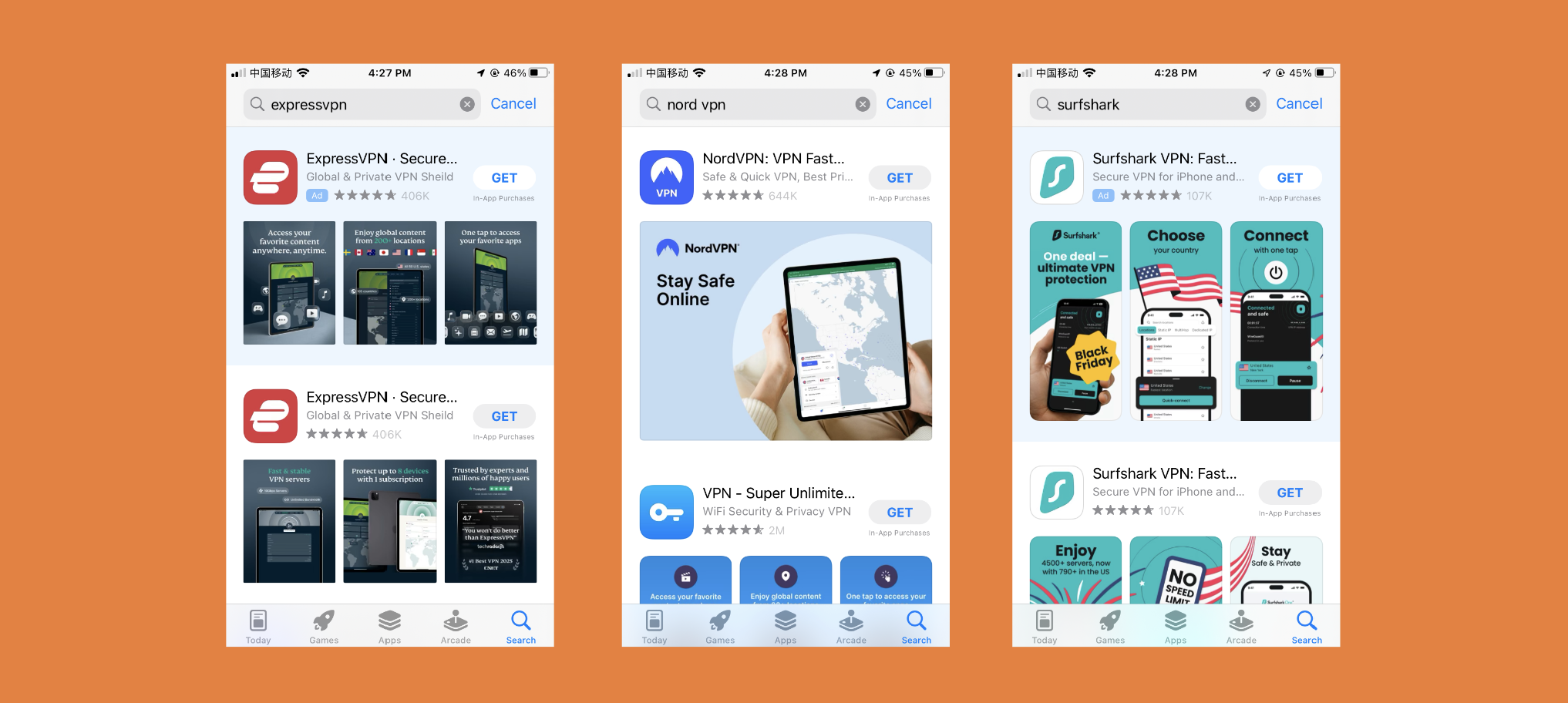
A VPN is basically a tiny switch on your phone: once turned on, all your internet traffic gets encrypted and rerouted so it looks like you’re browsing from Hong Kong, Japan, the US, etc. This lets you open YouTube, Google, WhatsApp, Instagram, Gmail, and other blocked sites and services just as if you were outside China.
When you buy a Chinese SIM card, the carrier may sometimes mention VPN packages, but the quality can vary a lot. If you want a more stable option, people usually look at established international providers such as ExpressVPN, NordVPN, or Surfshark. It is best to download the app and buy a plan before you enter China.
Frequently Asked Questions
Can tourists buy a SIM card and get a Chinese phone number in China?
Yes. Foreign visitors can buy a tourist-oriented physical SIM card in China and get mobile data for mainland China. You can buy one at airport counters or city carrier stores, or book a tourist SIM card online through Trip.com before arrival and pick it up after landing.
How do I get a SIM card for China?
The most common ways are airport counters, city carrier stores, and online purchase with airport pickup. In most cases, you need to show your passport, complete real-name registration, and choose a plan based on your stay length and data needs.
Which SIM card is best in China for foreigners?
If you are mainly staying in cities, China Unicom is usually the friendliest option for foreign visitors. If you will travel into more remote areas, China Mobile often has broader coverage. If you care more about tourist package value, China Telecom may also be worth comparing. There is no single best choice for everyone. It depends on your itinerary, package needs, and how you plan to buy it.
How many GB of data do I need for 10 days in China?
If you mainly use maps, payments, ride-hailing, messaging, and occasional travel planning, 5-10GB is usually enough. If you also spend a lot of time on social media, short videos, or hotspot sharing, you should choose a higher-data plan.
Can a China travel eSIM make calls and receive SMS?
Not always. Many travel eSIM plans are data-only, which means no regular calls and no SMS verification codes. Before buying, check carefully whether the plan includes a local number, call minutes, and SMS support.
When do I need to use a VPN in China?
If you are using a Chinese local SIM card and want to access overseas services such as Google, YouTube, WhatsApp, or Instagram, you will usually need a VPN. When you use Chinese local apps, you usually do not need one, and speeds are often better with the VPN turned off. If you are using a travel eSIM or international roaming service that can access the global internet directly, you usually do not need an extra VPN.
Can I use my home-country SIM card in China?
Yes, as long as your carrier has enabled international roaming in mainland China and your phone can use data, make calls, and receive SMS normally. For short-term visitors, international roaming or keeping your original SIM while adding a travel eSIM can both be convenient options. But roaming is usually more expensive, and if you need to use certain Chinese local apps, a Chinese local number may still be necessary.
Related Links
Written by
Richie Shi
I’m Richie. I help foreigners solve problems related to China. Feel free to reach out directly.
Recommended articles
All guidesHow to Book Hotels in China as a Foreigner: 2026 GuideCompare Trip.com, Agoda, Booking.com, Expedia and local hotel apps, then avoid issues with foreign guest policies, passports, credit cards and deposits.Richie Shi How to Book China High-Speed Rail Tickets in 2026Book China high-speed rail tickets as a foreigner with passport tips, Trip.com vs 12306, 15-day sales, reservations, payment options, and boarding steps.Richie Shi
How to Book China High-Speed Rail Tickets in 2026Book China high-speed rail tickets as a foreigner with passport tips, Trip.com vs 12306, 15-day sales, reservations, payment options, and boarding steps.Richie Shi